Next-generation self-serve experiences powered by Conversational AI + Vision Analytics
Brought to you by MetroClick, an industry leader in digital engagement and immersive technologies.
What Are AI-Powered Kiosks?
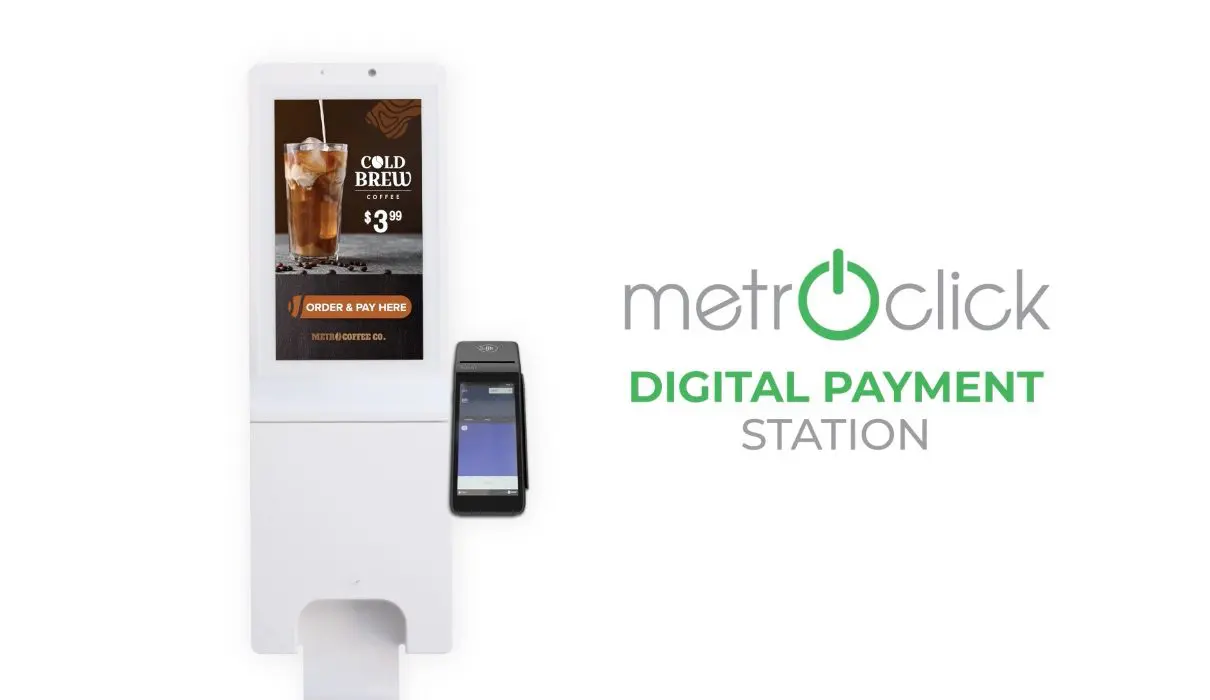
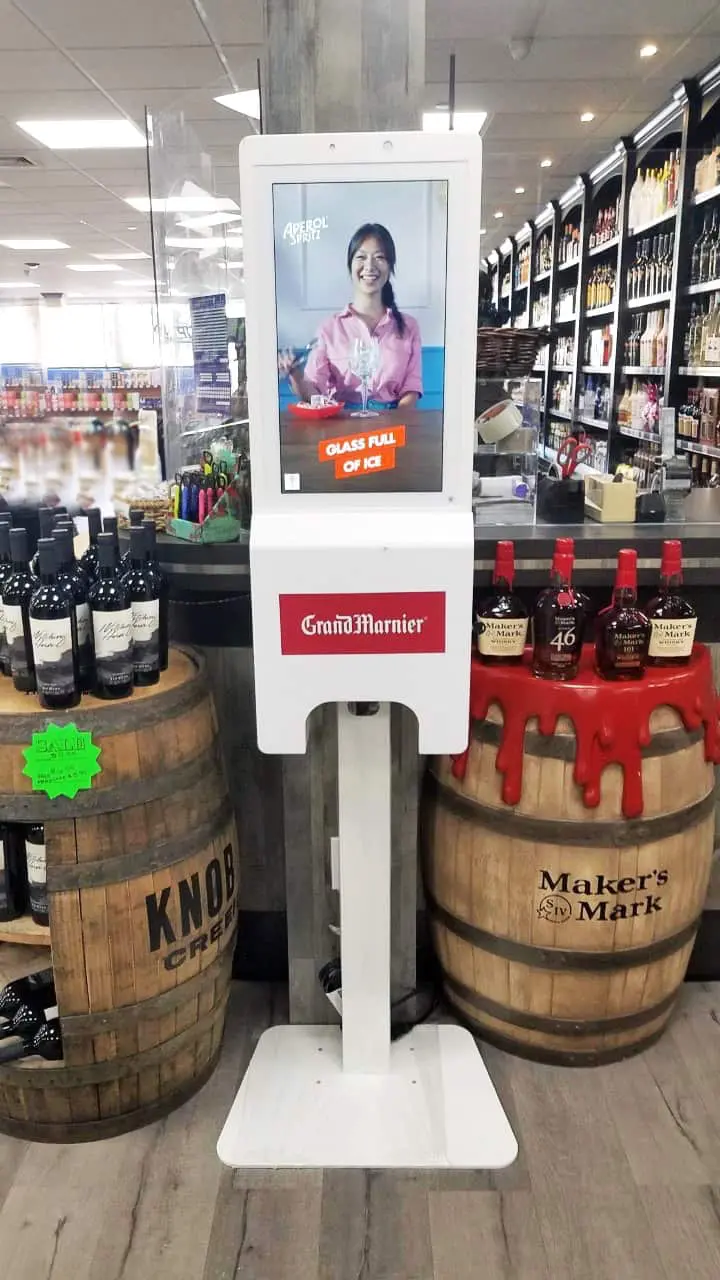
AI-powered kiosks are self-service terminals enhanced with conversational AI, computer vision (vision analytics), and edge AI computing to deliver personalized, real-time, adaptive customer experiences in physical environments.
Unlike traditional touch-screen kiosks that rely on static menus, intelligent kiosks use:
- Conversational AI and LLM-powered intent engines
- Computer vision analytics
- Real-time edge AI processing
- Behavioral analytics
- Enterprise system integrations (POS, CRM, loyalty platforms)
They are transforming AI in retail, hospitality, healthcare, QSR, transportation, and more, bringing digital intelligence into brick-and-mortar environments.
This is the rise of physical AI — where self-service technology becomes context-aware, adaptive, and revenue-generating.
Why AI in Retail Settings Is Moving to the Edge
Digital innovation in retail settings is no longer confined to e-commerce, cloud services, and mobile apps. The next frontier is the physical customer interaction layer — where customers walk into stores, restaurants, and service locations.
Edge AI computing allows AI-powered kiosks to process data locally in real time without relying entirely on cloud latency. This enables:
- Faster response times
- Privacy-preserving analytics
- Real-time personalization
- Dynamic interface adaptation
For retailers and brands, this means physical locations can now perform with the intelligence of digital commerce platforms.
And the data shows this transformation is not theoretical — it’s happening now.
How Conversational AI Transforms Self-Service Kiosks
Traditional self-service kiosks require customers to navigate rigid, nested menus. If they make a mistake, they start over.
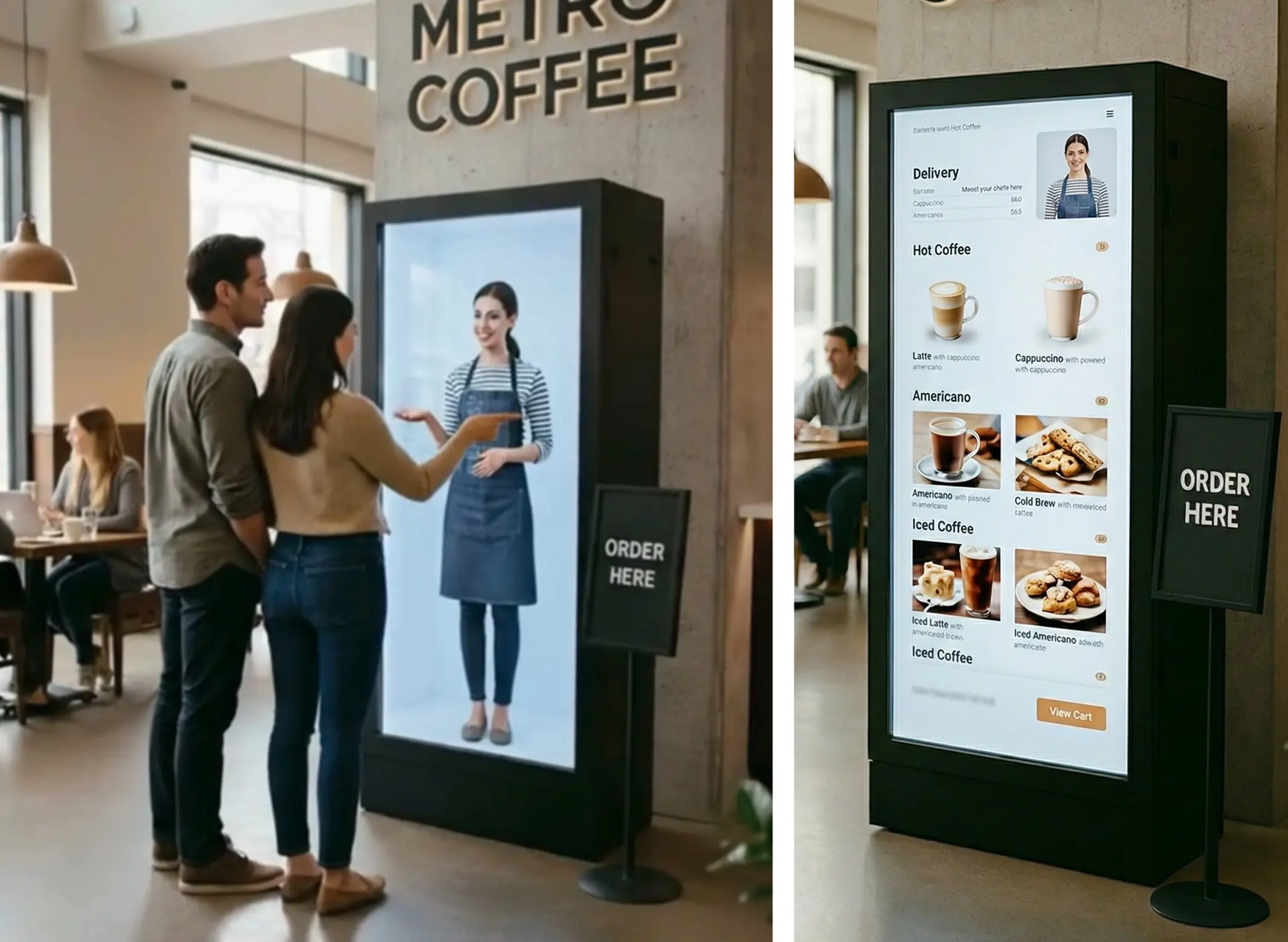
AI-powered self-service kiosks replace static navigation with natural language understanding. Instead of tapping through screens, customers can say:
- “I’m looking for something quick.”
- “I need to return this and only have 10 minutes.”
- “What’s your most popular option?”
Instead of forcing navigation, Conversational AI:
- Interprets intent using LLM-powered engines
- Dynamically constructs optimized journeys
- Reduces friction and abandonment
- Increases accessibility for first-time, elderly, and multilingual users
- Improves inclusion and ESG (environmental, social, governance) alignment
The interaction becomes fluid rather than mechanical. The kiosk adapts to the user — not the other way.
Business Impact of Conversational AI
Where deployed, retailers and operators have reported:
- 2–4× higher conversion rates
- 10–50% higher average order value (AOV)
- Reduced onboarding friction for new customers
- Increased upsell effectiveness through contextual recommendations
Conversational AI in self-service technology is no longer experimental — it is commercially deployable and delivering measurable ROI.
The competitive differentiator is no longer whether the technology exists — but who integrates it effectively.
How Vision Analytics Allow Kiosks to See
Where conversational AI allows kiosks to understand language, vision analytics allow them to understand behavior.
Modern edge AI vision systems can detect:
- Queue length and congestion
- Dwell time and hesitation
- Traffic flow patterns
- Group vs. individual shoppers
- Engagement hotspots
When processed anonymously and responsibly at the edge (without storing raw images or biometric identifiers), this data becomes a powerful optimization engine — unlocking a new level of intelligence.
How Vision AI Improves Retail Operations
AI-enabled kiosks can:
- Shift to rapid-throughput mode during peak hours and long queues
- Offer proactive assistance when hesitation is detected
- Simplify interactions when confusion patterns emerge
- Recommend bundled offers for group shoppers
In Retail and QSR environments, behavioral AI have been shown to reduce queue abandonment by 10–20% and increase throughput during peak demand — outcomes that directly improve customer satisfaction and revenue.
Why Convergence is Key to Deliver Context-Aware, Adaptive Self-Serve Systems at the Edge
The real breakthrough occurs when conversational AI, computer vision, and enterprise data systems converge at the edge.
Imagine this scenario:
A customer stands in front of a self-service kiosk and pauses. Vision AI analytics detects hesitation. The conversational interface gently prompts: “Can I help you find something?”
The customer responds naturally. The system understands intent. But it also recognizes that the customer appears rushed. The interface then simplifies dynamically and prioritizes speed.
The next customer is a repeat customer (opt-in). With loyalty integration, the kiosk greets them by name and offers their usual order, without the customer having to navigate a menu. Not because it is programmed to follow a script — but because it understands context, preferences, history, and environment.
These are not futuristic scenarios. They are architecture patterns enabled by technologies that already exist, transforming a kiosk into:
- Adaptive customer journey platforms
- Real-time experimentation engines
- Data-generating retail infrastructure
And when retailers bring this level of digital intelligence into brick-and-mortar environments, they build competitive advantage through adaptive experience design and differentiation.
How AI-Powered Kiosks Increase Revenue and ROI
Historically, kiosks were deployed to reduce labor costs and shorten lines. While those benefits remain, intelligent kiosks now directly drive revenue growth.
Operational Efficiency Gains
- 15–30% reduction in front-of-house labor pressure
- 20–40% increase in order throughput during peak hours
- Reduced queue abandonment
Revenue Growth Impact
When powered by conversational AI and behavioral analytics, kiosks can deliver:
- 5–15% lift in average order value (AOV)
- 3–8% improvement in conversion rates
- 10–20% reduction in abandonment
- Real-time promotion optimization based on a variety of in-location factors
Even a modest 3–5% enterprise-wide revenue lift can materially impact EBITDA.
Imagine a retail kiosk during rush hour behaving differently than it does during a mid-afternoon lull. Or a coffee shop kiosk on a rainy day surfacing different promotions than it does on a sunny weekend.
For organizations evaluating AI kiosk ROI, the value case now spans both cost reduction and revenue acceleration.
Beyond Experience: Operational Intelligence
The impact extends beyond the customer interface.
Intelligent kiosks represent something more powerful, where the data provides leaders with real-time operational insights:
- Which products drive engagement, but not purchase
- Behavioral analytics revealing friction points and better menu designs
- Personalized promotion effectiveness
- Smarter staffing decisions
- Optimized product placement and merchandising strategies
- Reduced abandonment through adaptive flows
Basically, this intelligence allows retailers to build a data flywheel: deploy, measure, optimize, deploy again — reducing guesswork in experience design and increasing compounding ROI. The kiosk becomes both a service channel and a real-time experimentation platform embedded in the physical environment.
Additional Considerations: Accessibility and Trust
Accessibility: Treating as a Strategic Advantage
Conversational AI dramatically expands who can comfortably use self-service technology.
Voice navigation:
- Reduces dependency on touchscreens
- Removes friction for global users with real-time language switching
- Enlarge text or simplify options based on detected needs
For organizations focused on accessibility, inclusion, and ESG (environmental, social, governance) priorities, intelligent self-serve kiosks represent a meaningful opportunity — not just a technological upgrade.
Privacy and Trust as a Design Principle
As kiosks gain sensory intelligence in brick-and-mortar retail, privacy and trust become non-negotiable.
Best-practice AI kiosk deployments prioritize:
- Edge processing (no centralized storage of raw images)
- Anonymized behavioral analytics
- Explicit opt-in for identity recognition
- Transparent AI usage policies
- GDPR and CCPA compliance
- Responsible AI governance frameworks
Privacy is not a constraint — it is a competitive differentiator where trust is as important as intelligence.
The Broader Strategic Context: The Rise of Physical AI
We are entering the era of physical AI — where AI systems are embedded in real-world environments, moving beyond screens in our pockets into the environments around us.
Intelligent kiosks can:
- See
- Listen
- Understand
- Adapt
- Learn
- Optimize continuously
They blur the line between digital commerce and in-store retail, enabling omnichannel consistency and real-time adaptation. In doing so, they redefine what self-service means.
This is the next phase of AI in digital transformations.
Frequently Asked Questions About AI-Powered Kiosks
How much do AI-powered kiosks cost?
Costs vary depending on hardware, software, AI capabilities, and enterprise integration. However, most deployments show positive ROI through increased AOV, improved conversion, and labor optimization.
Do AI kiosks store personal data?
Modern edge AI systems process data locally and prioritize anonymization. Identity recognition requires explicit opt-in and compliance with GDPR/CCPA regulations.
How do AI kiosks increase revenue?
Through contextual upselling, real-time personalization, reduced friction, and adaptive flows that increase conversion rates and average order value.
What is the difference between edge AI and cloud AI in kiosks?
Edge AI processes data locally for low latency and improved privacy. Cloud AI enables broader analytics and model updates. Most enterprise systems use a hybrid architecture.
Can AI kiosks integrate with POS and loyalty systems?
Yes. Enterprise-grade AI kiosks integrate with POS, CRM, loyalty platforms, and inventory systems to enable personalization and operational insights.
What are some of the more relevant use cases today for AI-Powered Kiosks?
AI self-service kiosks are expanding across sectors. Some of the more relevant use cases we are seeing are:
Retail
- Smart merchandising
- In-store personalization
- Traffic flow analytics
Hospitality
- AI hotel check-in kiosks
- Personalized guest services
Quick-Service Restaurants (QSR)
- AI-powered self-order kiosks
- Dynamic upsell recommendations
- Peak-hour throughput optimization
Healthcare
- Patient self-check-in kiosks
- Reduced administrative bottlenecks
Transportation
- Smart ticketing systems
- Airport self-service automation
Final Thought: From Touchscreens to Intelligent Retail Infrastructure
AI-powered kiosks are no longer just self-service machines. They are edge AI platforms that merge conversational intelligence, computer vision, and operational analytics into the physical customer journey.
The question is no longer whether AI will transform brick-and-mortar retail.
It already is.
The strategic decision facing enterprise leaders is this:
Will your organization treat kiosks as transactional hardware and glorified touchscreens — or as intelligent infrastructure capable of driving sustained revenue growth, operational efficiency, and differentiated customer experience?
Those that embrace conversational and vision AI into their physical environments now will secure an advantage — operationally and financially — for years to come.
The technology isn’t tomorrow’s promise. The intelligent edge is here. And it is redefining self-service technology across consumer-facing, retail-based settings.
Now, are you ready for it?